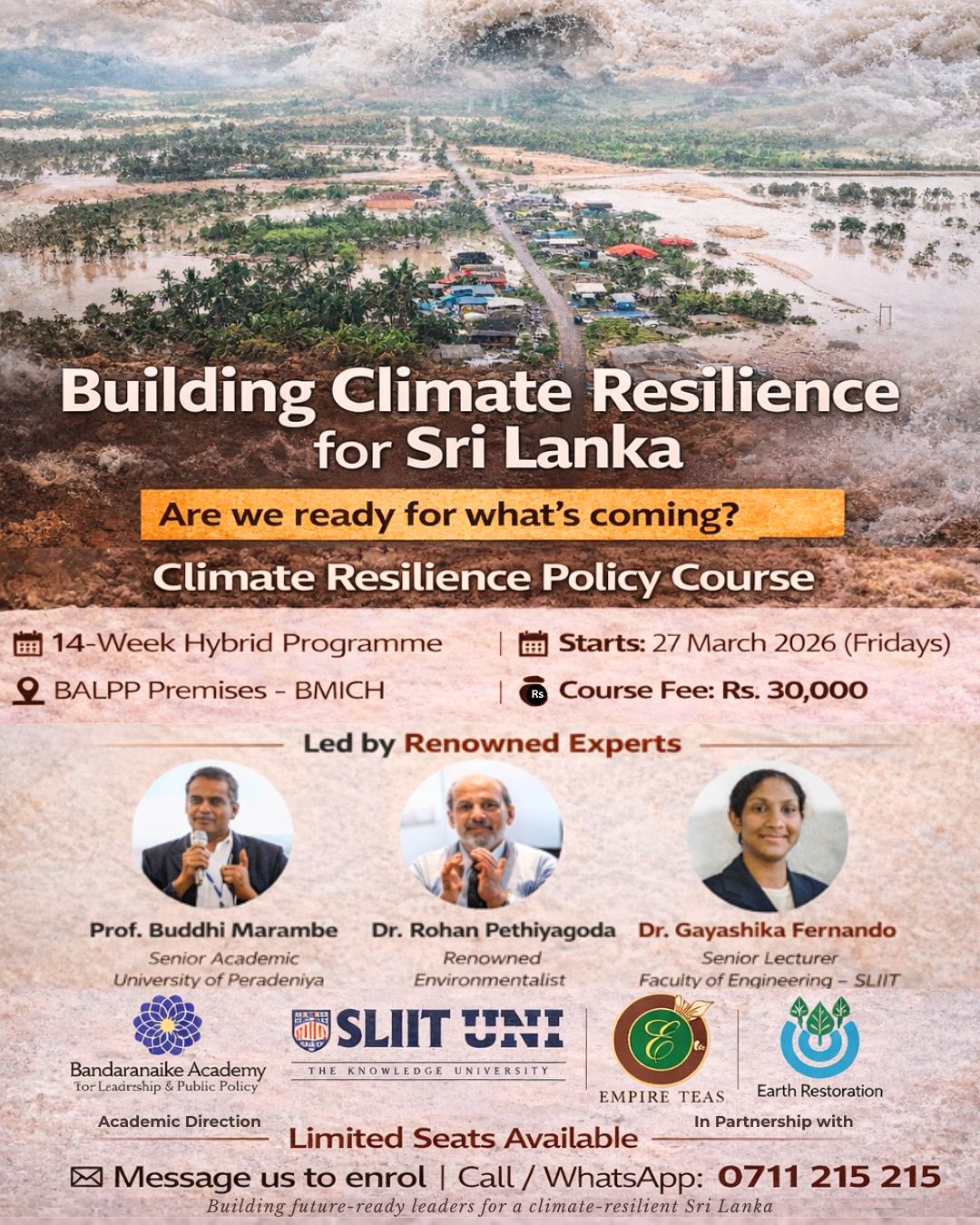
Overview
The Climate Resilience Policy Course is a comprehensive three-month programme designed to equip participants with a clear, practical understanding of climate change impacts and the policy tools required to build long-term resilience.
Developed as the first structured climate resilience policy programme in Sri Lanka, the course brings together climate science, public policy, governance, and development planning to help participants understand how climate risks intersect with economic stability, social vulnerability, and institutional decision-making in the Sri Lankan context. Whether you are an environmental practitioner, policymaker, development professional, student, or simply seeking a deeper grasp of climate-related challenges, the programme offers grounded insights into climate adaptation, resilience planning, and evidence-based policy responses, making it a timely and relevant learning opportunity for anyone engaged in shaping Sri Lanka’s climate future.
Course Content
Understanding the multifaceted impact of climate change in Sri Lanka: Learn how climate change affects Sri Lankan society, disrupts ecosystems, and intensifies economic losses through floods, droughts, landslides, and other climate-induced disasters.
Importance of sustainable development in Sri Lanka: Explore how sustainable development practices support long-term climate resilience, balance economic growth with environmental protection, and reduce vulnerability across communities and sectors.
Renewable energy solutions for climate resilience: Discover how Sri Lanka’s renewable energy potential, including solar, wind, and hydro, contributes to climate resilience, energy security, and reduced dependence on fossil fuels.
International climate agreements and Sri Lanka’s commitments: Examine global climate frameworks and agreements and understand how Sri Lanka engages with international climate policy, financing mechanisms, and adaptation and mitigation strategies.
Schedule
- Classes are held every Thursday starting from 27th March, 2026.
- Location: BALPP Premises at BMICH.
Course Fee
- The course fee is 30,000 LKR.