

Open Forum on Current Education Reforms 2025
Open Discussion on Education Reforms in Sri Lanka
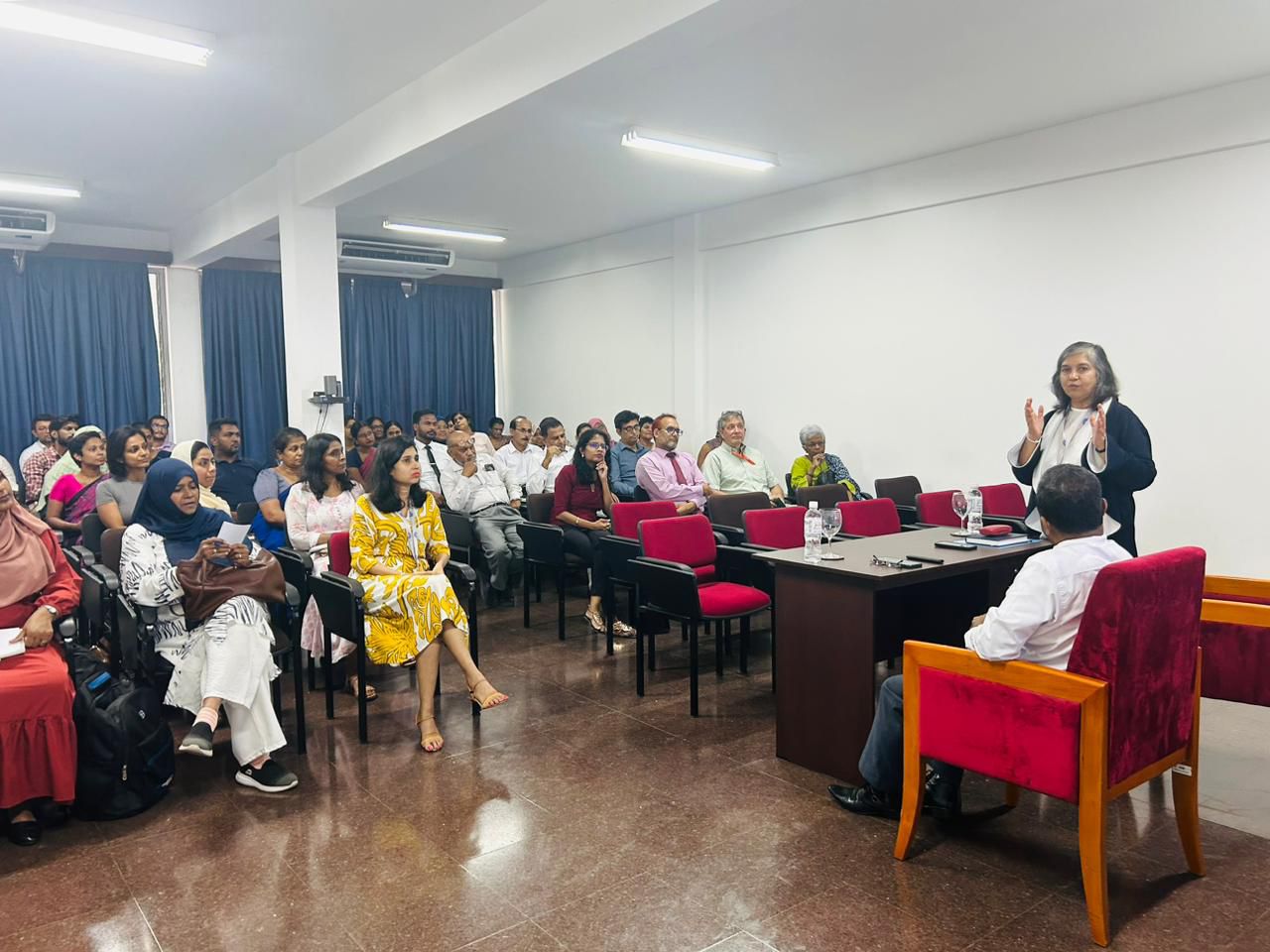
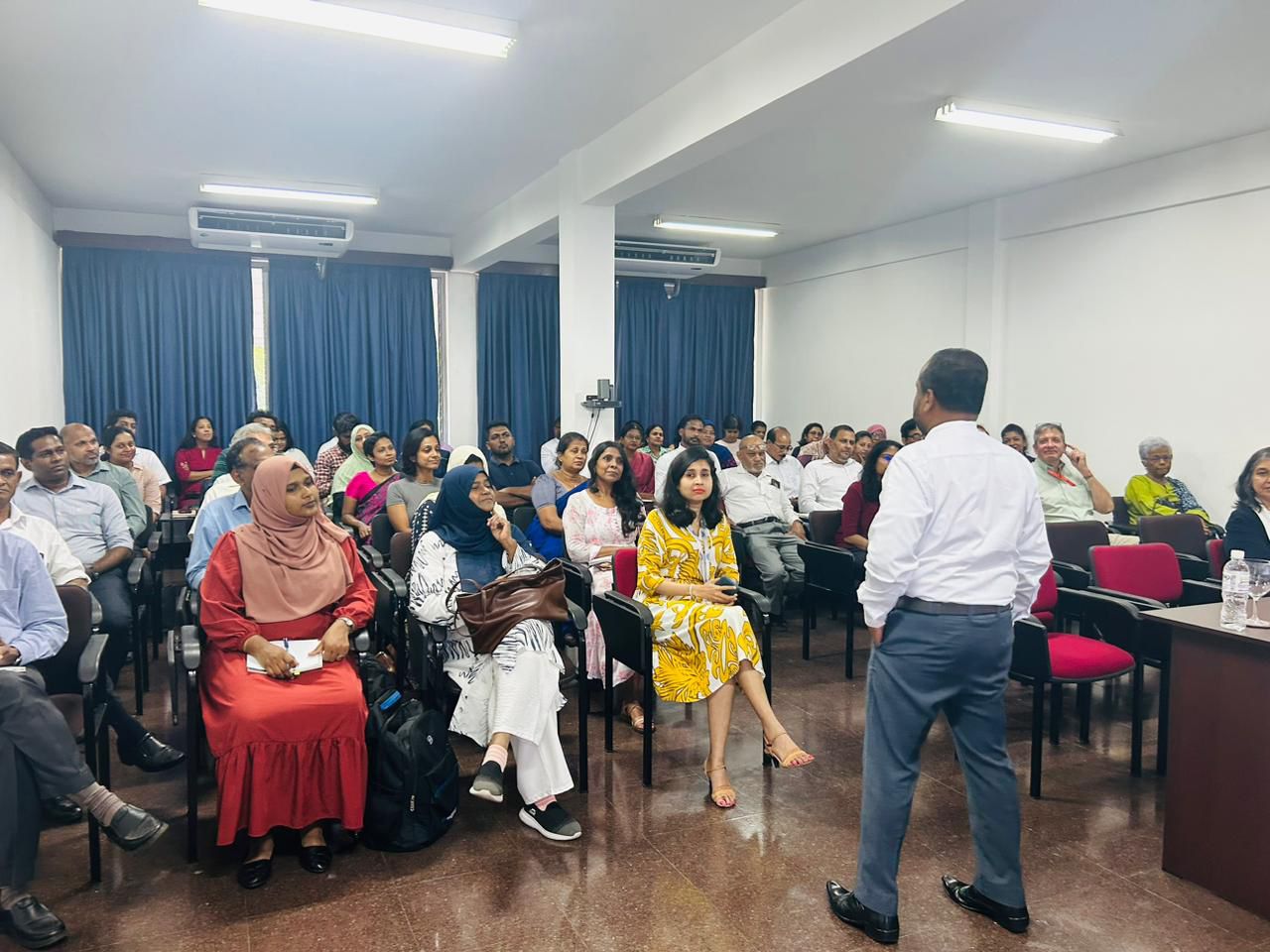
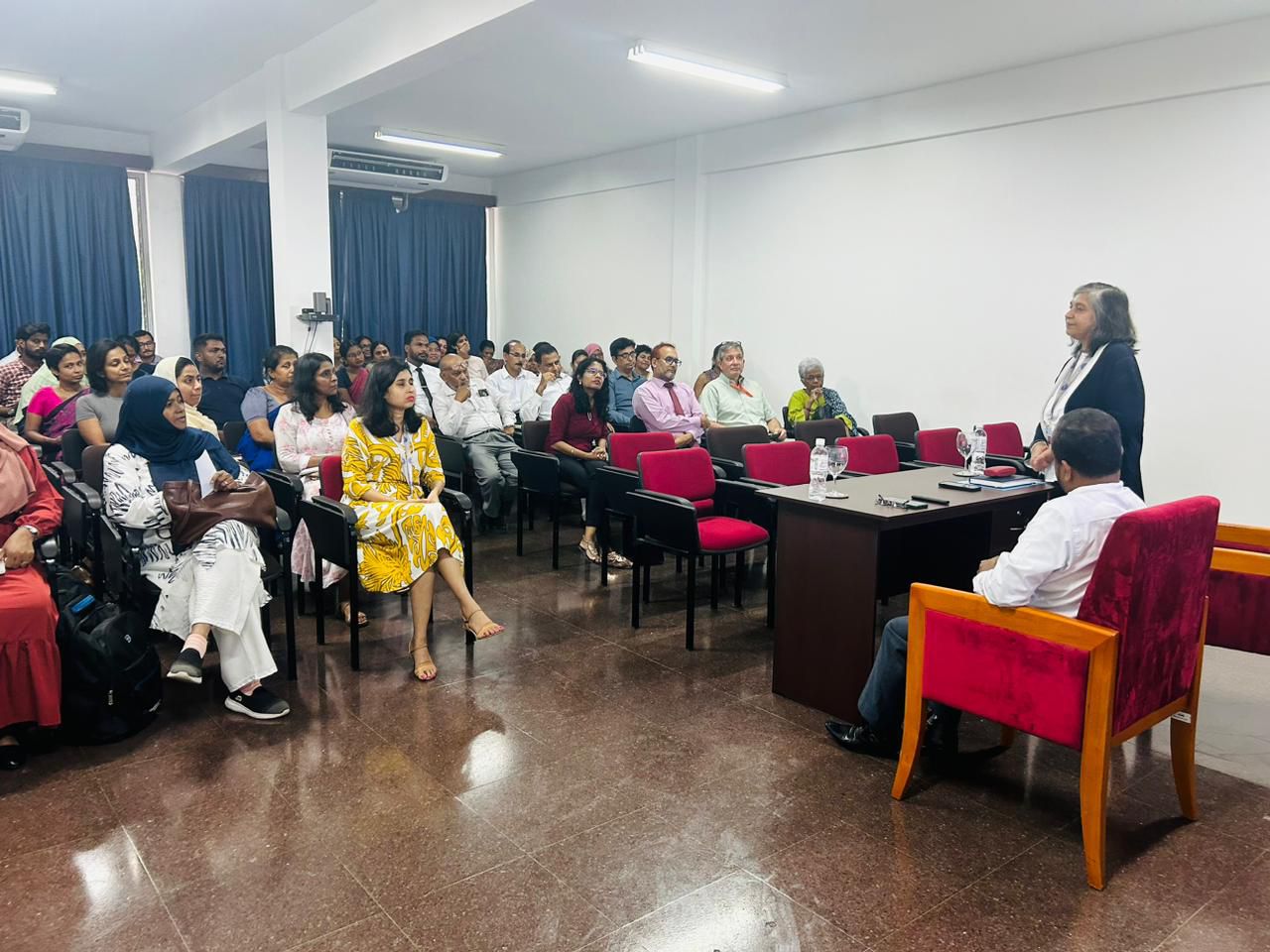
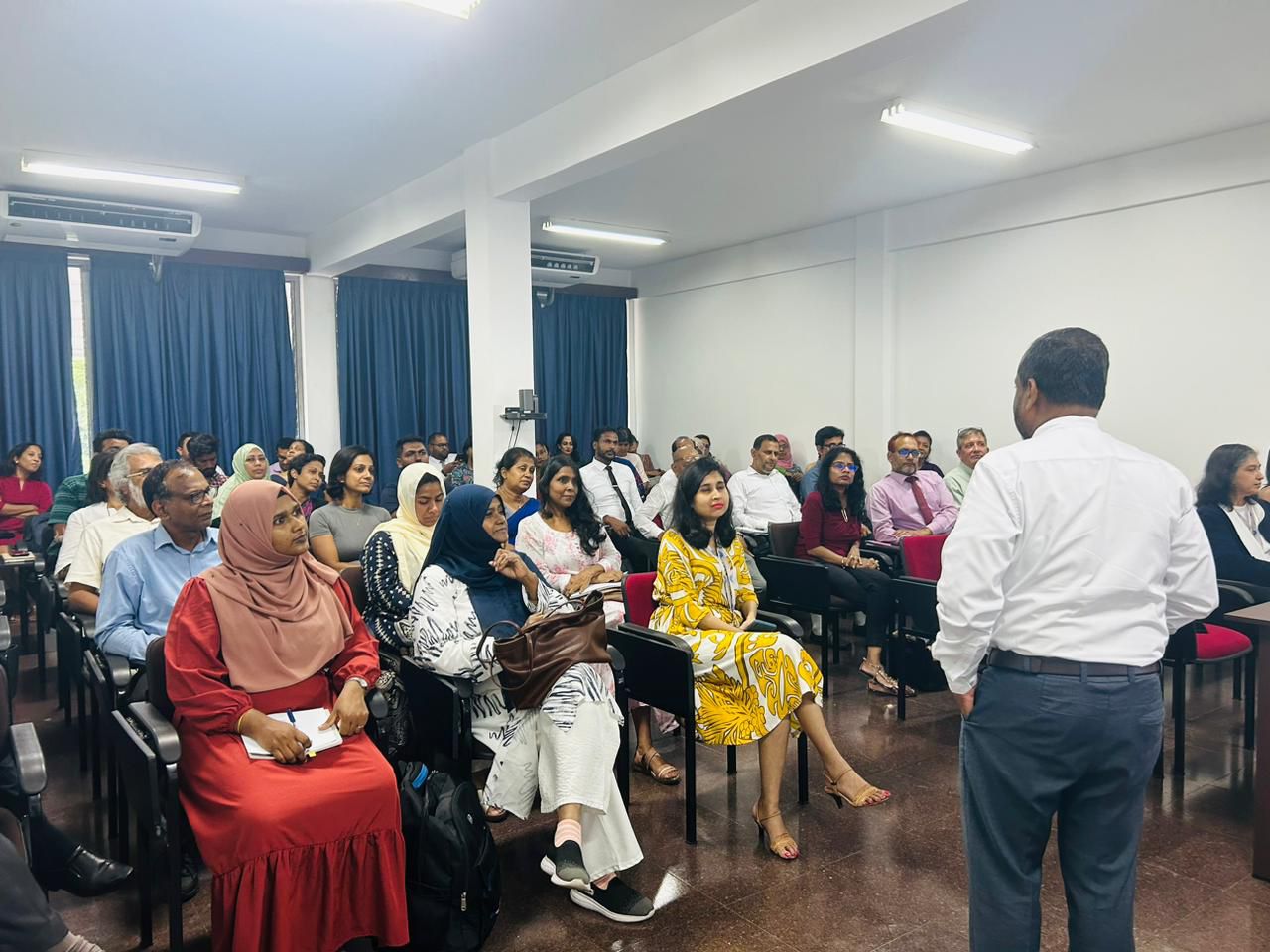
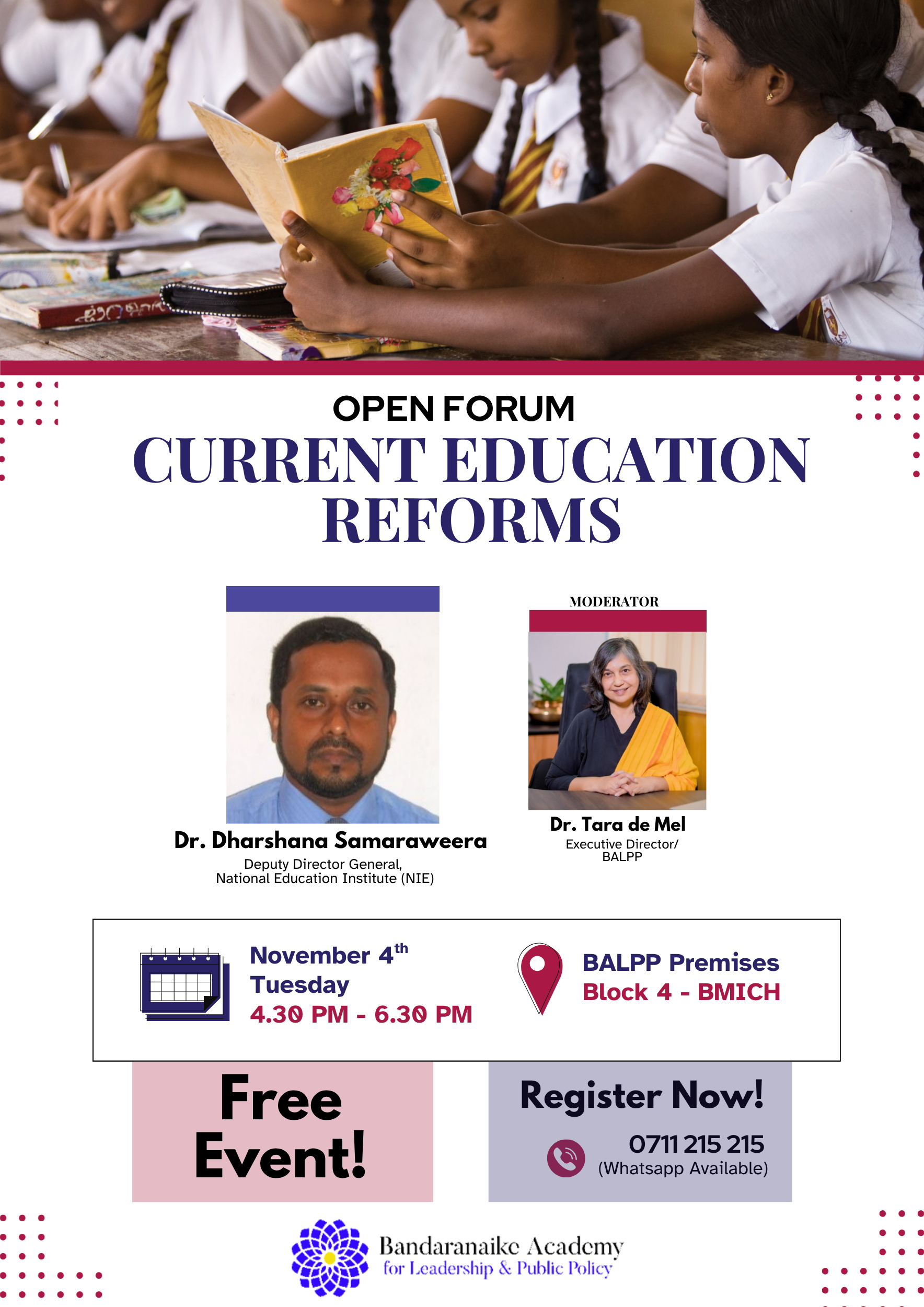
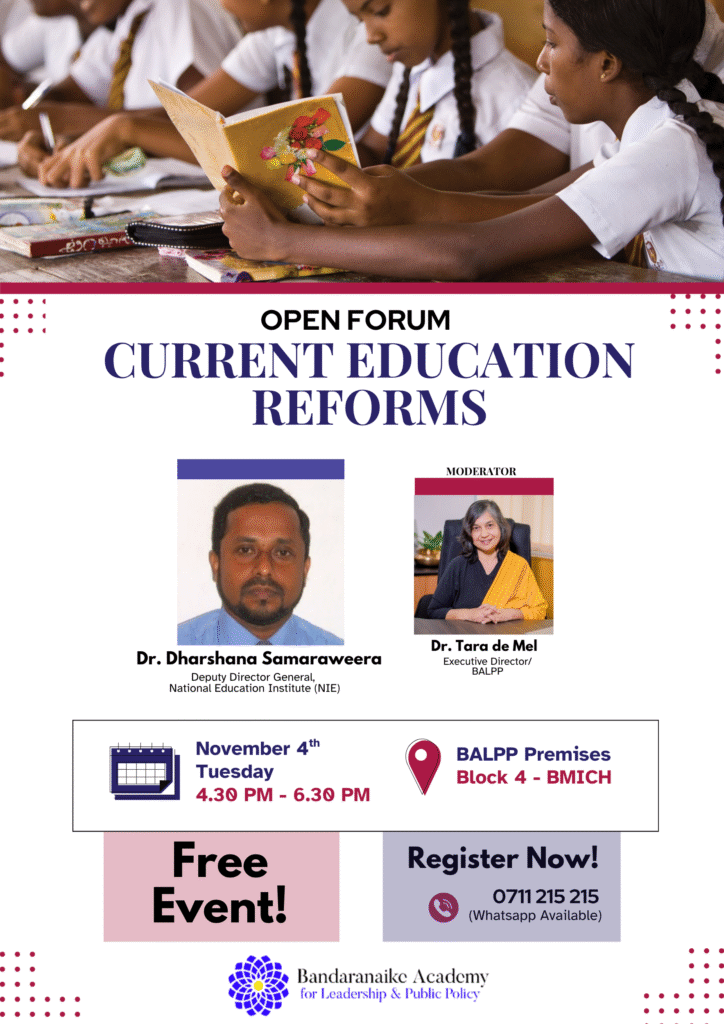
The Bandaranaike Academy for Leadership and Public Policy (BALPP) convened an open discussion on Sri Lanka’s ongoing education reforms on November 4th at the BMICH. The event brought together educators, academics, administrators, and professionals from government, corporate, and non-governmental sectors to engage in a constructive and evidence-based dialogue on the future of education in the country.
The forum featured Dr. Dharshana Samaraweera, Deputy Director General of the National Institute of Education (NIE), as the main speaker, and was moderated by Dr. Tara de Mel, Executive Director of BALPP. Discussions centered on the major policy, structural, and curricular changes currently shaping Sri Lanka’s education landscape.
By providing an informed and non-partisan platform, BALPP facilitated a meaningful exchange of ideas among stakeholders committed to improving educational outcomes. The event reaffirmed the Academy’s role in fostering inclusive dialogue and thought leadership on critical national policy issues.
The sessions featured a panel of distinguished resource persons — Mr. Mohamed Faslan, Mr. Shakthi De Silva, and Ms. Gayani Hurulle — who delivered lectures and interactive presentations covering core principles of research design, data interpretation, and the relationship between research and policy outcomes. Their insights offered participants a practical foundation for understanding how empirical evidence can guide decision-making in the public sector.
Representing the Marga Institute, Ms. Niruni de Mel conducted a session on developing a Public Policy Toolkit, offering a simplified framework to support researchers and practitioners in designing, executing, and communicating policy studies more effectively. Her presentation emphasized practical approaches to translating research findings into actionable public policy recommendations.
Through this initiative, BALPP’s Research Wing continues to foster a research-driven policy culture in Sri Lanka; encouraging public sector professionals, academics, and emerging policy thinkers to adopt rigorous, evidence-based methods in addressing the nation’s governance challenges.